Designed to remain fixed in place


Full-Arch Dental Implants
Same-Day Full-Arch Dental Implants in Manhattan
Move beyond failing teeth or dentures with precision-planned treatment designed for stability, function, and long-term confidence. For qualified patients, temporary teeth may be placed the same day as surgery.
Best suited to patients with multiple failing or missing teeth who are seeking a comprehensive long-term solution.
Advanced digital planning
Manhattan-based care
Designed for comfort, function, and aesthetics
How does it work?
What Does Full-Arch Treatment Mean?
Full-arch dental implants are designed to replace most or all teeth in the upper or lower arch using a limited number of strategically placed implants. Some patients know this category by terms like All-on-4. In many cases, four to six implants can support a full set of fixed teeth.
Most or all teeth replaced in one arch
Often supported by four to six implants
Designed as a fixed, long-term solution
Planned around function, stability, and esthetics
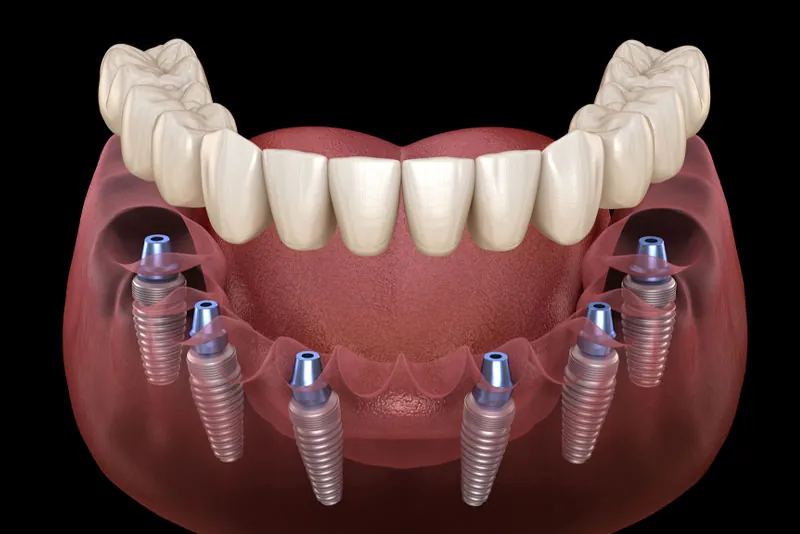
Function, Comfort, and Long-Term Results
When Teeth Become Unstable, Daily Life Becomes More Difficult
If you are living with failing teeth, loose dentures, or advanced dental issues, the effects often extend well beyond your smile. Eating becomes harder. Speaking can feel less natural. Daily life may involve uncertainty, discomfort, or frustration.
Full-arch dental implants offer a more stable, lasting solution for patients seeking a fixed approach designed around function, comfort, esthetics, and long-term results.

Why Patients Choose This Option
Why Patients Choose Full-Arch Dental Implants
Stable, Fixed Support
Unlike removable dentures, full-arch implants are designed to feel stable, secure, and anchored in place.
Planned for Function and Esthetics
Treatment is planned with both function and appearance in mind for a result that feels natural, balanced, and more like you.
Comprehensive Case Planning
This approach can be ideal for patients facing multiple failing teeth, significant dental breakdown, or the need for a comprehensive treatment plan.
More Predictable Everyday Comfort
Many patients appreciate moving beyond the discomfort, movement, and daily compromises that can come with traditional dentures.
Designed for Daily Function
A stable smile can make it easier to eat, speak, and move through daily life with more confidence.
Efficient Treatment for Qualified Patients
For qualified patients, temporary teeth may be placed the same day as implant surgery.
Real Results
Selected Treatment Outcomes
Every case is different, but the goal is the same: a result planned for stability, comfort, function, and esthetics.

Before

After
Full-Arch Rehabilitation
A more confident smile with improved support, symmetry, and everyday function.

Before
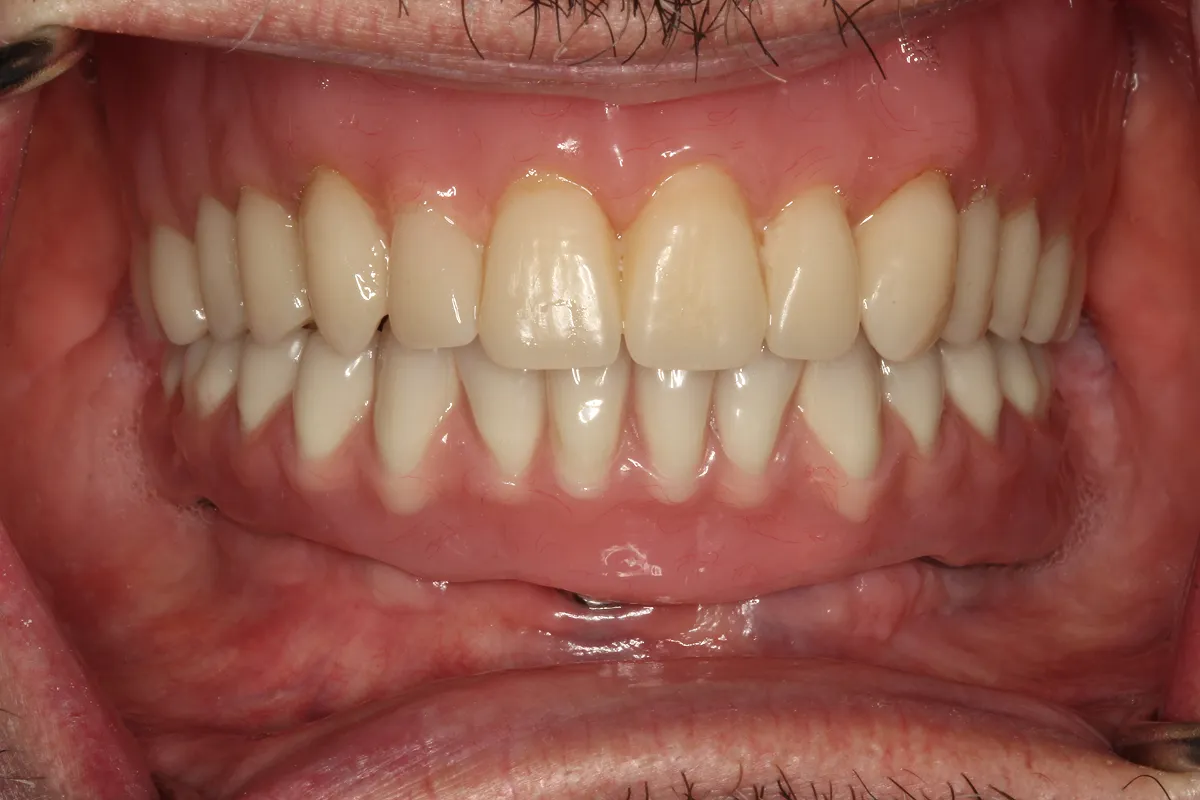
After
Denture Conversion
A fixed-teeth solution for a patient ready to move beyond the limitations of removable dentures.

Before
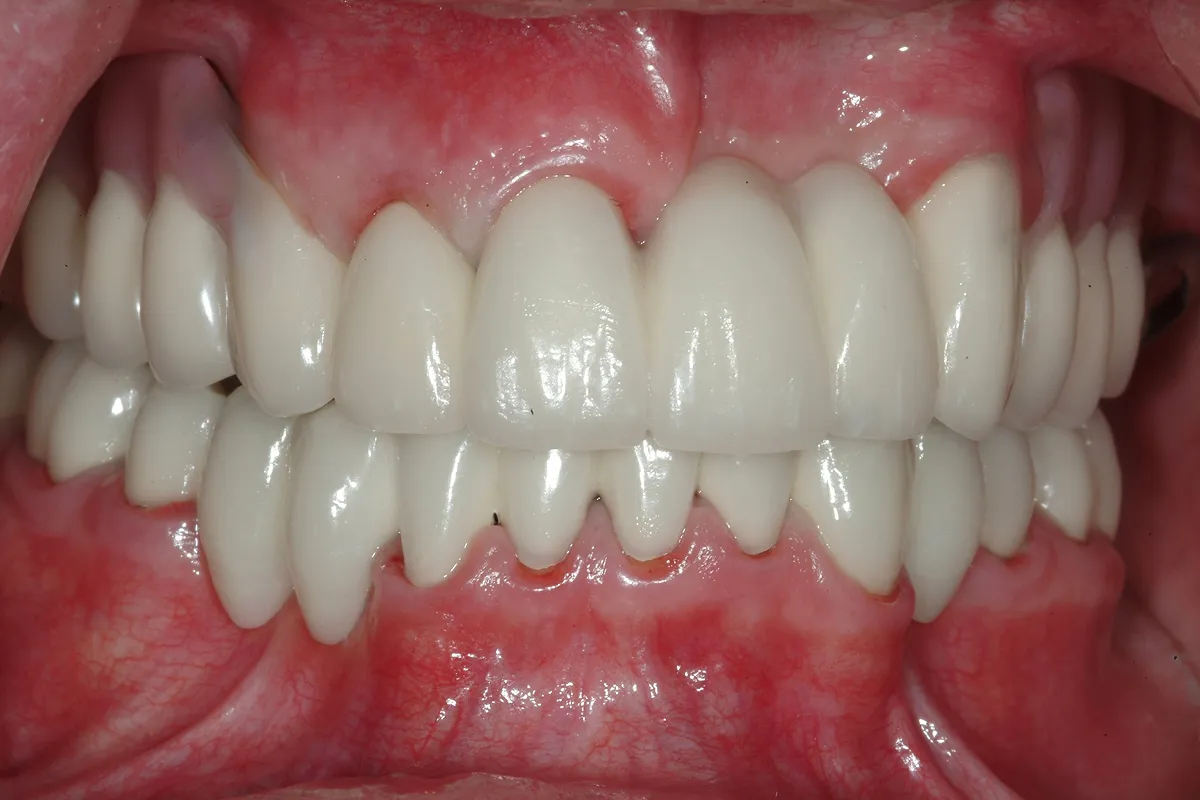
After
Falling Dentition to Fixed Restoration
A transformation designed to restore appearance, comfort, and peace of mind.
A Clearer Way to Compare
Skip the Tradeoffs of Traditional Dentures
For many patients, the decision comes down to long-term lifestyle and function. While dentures may be appropriate in some situations, patients seeking a more stable, fixed, and confidence-restoring solution often prefer a full-arch approach.
Feature
Full-Arch Dental Implants
Traditional Dentures
Stability
Can shift or move
Daily Feel
More secure and natural-feeling
May feel bulky or less stable
Appearance
Designed for support and aesthetics
Can vary based on fit and wear
Eating Confidence
Often improved for many patients
May come with limitations
Maintenance
No need for nightly removal
Must be removed and cleaned
Overall Experience
Designed for long-term confidence, comfort, and function
Often a more removable, maintenance-heavy option
Next Step
See if you are a candidate today
The best way to find out whether full-arch dental implants are right for you is with a personalized consultation. We will evaluate your dental condition, review imaging, discuss your goals, and help you understand what may be possible for your smile, comfort, and long-term quality of life.
The Process
What to Expect With Same-Day Full-Arch Dental Implants
For many patients, the decision comes down to long-term lifestyle and function. While dentures may be appropriate in some situations, patients seeking a more stable, fixed, and confidence-restoring solution often prefer a full-arch approach.
01
Consultation
We begin with an exam, imaging, and a conversation about your dental history, goals, and concerns.
02
Personalized Planning
Your treatment is digitally planned with close attention to implant placement, smile design, and overall case coordination.
03
Procedure
If appropriate, remaining compromised teeth may be removed and implants placed as part of the same treatment phase.
04
Temporary Teeth
Qualified patients may leave with temporary teeth the same day, giving you a functional and confident smile during healing.
05
Final Restoration
After healing, your final restoration is designed for long-term fit, appearance, function, and durability.
Is This Right For You?
Who May Be a Strong Candidate for Full-Arch Treatment
This type of treatment is often best suited to patients seeking a comprehensive, long-term solution rather than a short-term fix. Patients that:
are living with multiple failing or missing teeth
are frustrated by dentures or removable solutions
have been told they may need full-arch treatment
want a fixed alternative designed for long-term stability
are ready for a comprehensive consultation and treatment plan
The only way to know what may be appropriate for your situation is through an in-person consultation and imaging review.

Why Core Smiles
Why Patients Choose Core Smiles for Complex Implant Care
At Core Smiles, full-arch treatment is planned through comprehensive evaluation, advanced imaging, and a whole-mouth view of function, esthetics, and long-term stability.
Evidence-Based Treatment Planning
We take a comprehensive view of your case, using careful evaluation, imaging, and personalized planning to guide treatment recommendations.
Advanced Diagnostic Technology
Advanced imaging and digital tools help us evaluate your oral health, plan treatment precisely, and coordinate care with greater confidence.
Transparent Recommendations
We prioritize clarity and transparency so you can understand your condition, your options, and the reasoning behind your treatment plan.
Function and Esthetics, Planned Together
A full-arch solution should not only function well. It should also feel stable, look natural, and support long-term confidence.
FAQ
Commonly Asked Questions About Full-Arch Treatment
What are full-arch dental implants?
Full-arch dental implants are a fixed solution designed to replace most or all teeth in the upper or lower arch using a limited number of strategically placed implants.
Will I leave with teeth the same day?
Qualified patients may receive temporary teeth the same day as implant placement. Your doctor will determine what is appropriate based on your oral health, stability, and treatment plan.
How is this different from dentures?
Traditional dentures are removable. Full-arch dental implants are designed to provide a more stable, fixed solution for patients seeking greater comfort, function, and confidence.
Am I a candidate if I have failing teeth but not dentures?
Possibly. Many patients considering full-arch treatment still have natural teeth, but those teeth may be failing, broken, or no longer restorable.
How much do full-arch dental implants cost?
Cost depends on the complexity of your case, the number of arches being treated, extractions if needed, and the final restoration plan. The best way to understand pricing is through a consultation and a personalized treatment plan.
What if I have bone loss?
Bone support is one of the factors evaluated during your consultation and imaging. Some patients with bone loss may still be candidates, depending on their anatomy and treatment needs. In many instances, bone grafting can be accomplished so that implants can be placed.
Why do I need a consultation and imaging first?
This treatment is often best suited to patients with multiple failing or missing teeth, patients frustrated by dentures, or patients seeking a stable fixed alternative supported by comprehensive planning.Full-arch dental implant treatment involves precise surgical placement, and no two patients have the same anatomy, bone structure, or dental history.
A consultation allows us to evaluate your overall oral health, assess the condition of your remaining teeth, and understand your goals. Imaging — typically a 3D CBCT scan — gives us a detailed view of your bone volume, density, and nerve positions, all of which directly determine whether you are a candidate, how many implants are appropriate, and exactly where they should be placed. Without this information, it is not possible to develop a safe, accurate, or personalized treatment plan.
How do I know whether I need this versus individual implants?
That depends on how many teeth are missing or failing, the overall condition of your mouth, and your long-term goals. We will help you understand which options may be most appropriate during your consultation.