Enamel Regeneration
Amelogenin-Derived Peptides
P11-4 · Emdogain (EMD) · LRAP
Biomineralization signal peptides that mimic the body's own enamel matrix proteins, directing calcium and phosphate ions to rebuild hydroxyapatite crystal structure — regenerating enamel from within a lesion without drilling.If you are experiencing jaw pain, ear pressure, headaches, facial tension, jaw clicking, or bite discomfort, you may be suffering from temporomandibular joint (TMJ) disorder — a condition that is often misdiagnosed, mistreated, and misunderstood.
What It Is & How It Works
What is it?
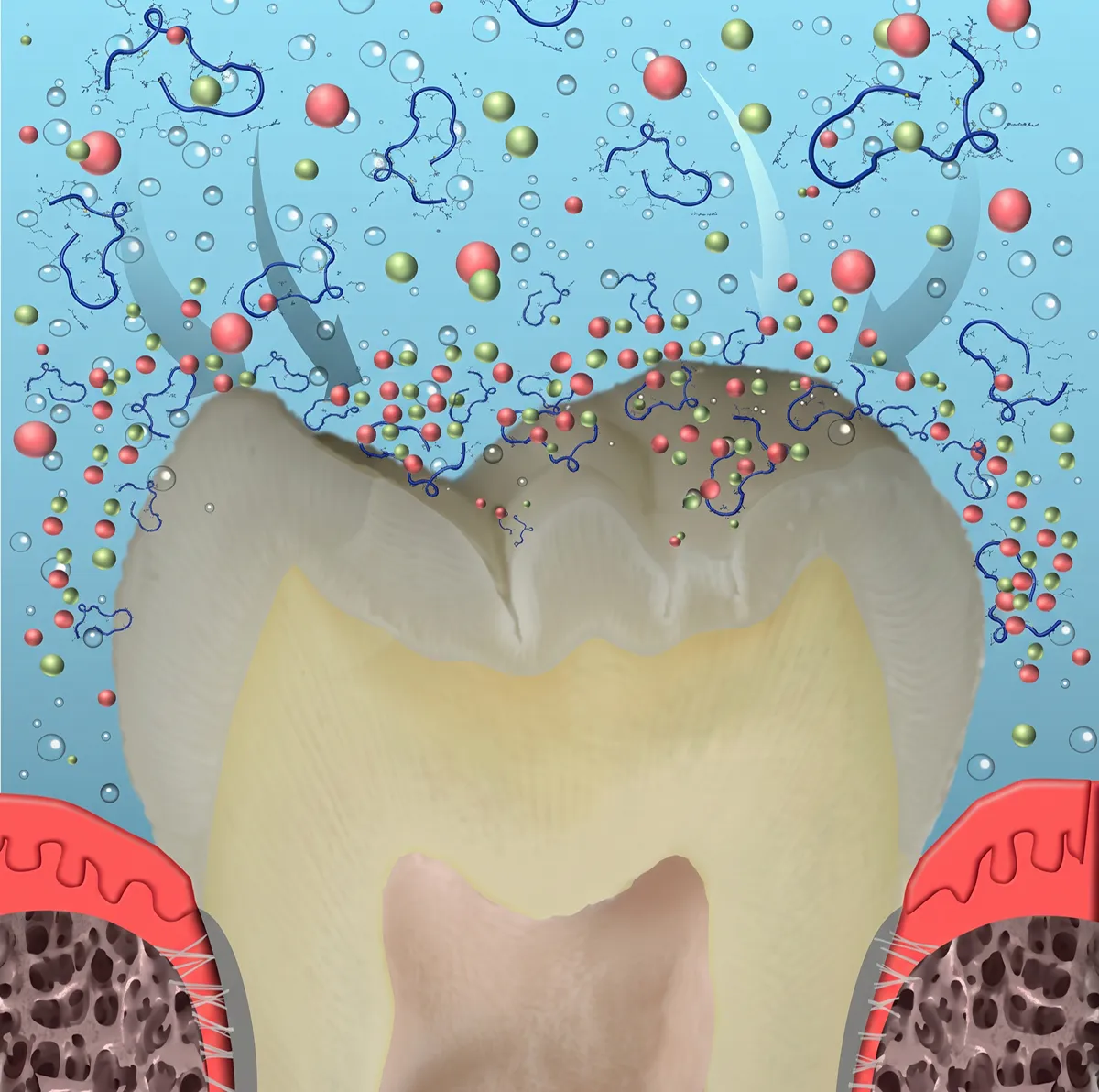
Amelogenin-derived peptides are short sequences derived from the enamel matrix proteins that orchestrate tooth development. P11-4 (commercially available as Curodont Repair) is a self-assembling peptide that creates a scaffold mimicking the enamel matrix, directing mineral ions to rebuild hydroxyapatite crystals from within a lesion.
How does it work?
When applied to an early carious lesion, P11-4 diffuses into the subsurface demineralized zone and self-assembles into a fibrous matrix. This matrix acts as a nucleation scaffold, attracting and organizing calcium and phosphate ions from saliva into new hydroxyapatite crystals — rebuilding enamel from the inside out without any tooth preparation.
Dental application
Emdogain (EMD) serves a related role in periodontal surgery — it re-creates the enamel matrix environment on root surfaces to regenerate lost periodontal attachment, new cementum, and alveolar bone. Both peptides are applied by your provider in-office as part of your treatment.
Key Benefits
- Arrests and reverses early-stage enamel caries (ICDAS 1–2) without drilling or restoration
- Rebuilds hydroxyapatite crystal structure from the subsurface — true regeneration, not just surface remineralization
- Emdogain promotes regrowth of periodontal attachment, new cementum, and alveolar bone after periodontal surgery
- Clinically validated in multiple randomized controlled trials
- Single in-office application — no ongoing home regimen required for P11-4
Key Benefits
What is it?
Amelogenin-derived peptides are short sequences derived from the enamel matrix proteins that orchestrate tooth development. P11-4 (commercially available as Curodont Repair) is a self-assembling peptide that creates a scaffold mimicking the enamel matrix, directing mineral ions to rebuild hydroxyapatite crystals from within a lesion.
How does it work?
When applied to an early carious lesion, P11-4 diffuses into the subsurface demineralized zone and self-assembles into a fibrous matrix. This matrix acts as a nucleation scaffold, attracting and organizing calcium and phosphate ions from saliva into new hydroxyapatite crystals — rebuilding enamel from the inside out without any tooth preparation.
Dental application
Emdogain (EMD) serves a related role in periodontal surgery — it re-creates the enamel matrix environment on root surfaces to regenerate lost periodontal attachment, new cementum, and alveolar bone. Both peptides are applied by your provider in-office as part of your treatment.